MY LENS, MY LAND
U.S.A | Short Documentary | 2024 | 24 mins | Tibetan with English Subtitles
About The Film
Daze, a Tibetan nomad, transformed his life with a camera. Documenting traditions and threats to the homeland, his philosophical films become a call to action, a lifeline for plateau creatures.
Where to Watch:
For educational distribution or institutional access, please get in touch with RAI Film.
Awards | Selections | Screenings
Re:Frame: Nearby and Opaque 2026, Sinema Transtopia, Berlin, Germany - Official Selection: Reframing the Topography
German International Ethnographic Film Festival (GIEFF) 2026, Göttingen, Germany - Honourable Mention, GIEFF Student Award · Official Selection
The 44th Nordic Anthropological Film Association (NAFA) International Ethnographic Film Festival 2025, Museum of Macedonia, Skopje, North Macedonia - Official Selection
The 4th edition of Incontri con il Cinema Buddhista (Encounters with Buddhist Cinema) 2025, Nuovo Cinema Aquila, Rome, Italy - Official Selection
Royal Anthropological Institute Film Festival 2025, Watershed, Bristol, UK - Official Selection: “Dis/placements: Currents of Transition. Local rhythms that disrupt and live in motion amid the impacts of climate and technological change.”
Asian Movie Night Spring 2025, Kino Rotterdam, Netherlands - Screening: “RIPPLES, ECHOES AND WHAT IF THE EARTH WHISPERS”
Colorado Environmental Film Festival 2025, USA - Official Selection
Prague Film Awards 2025, Czech Republic - Finalist (Best Student Documentary)
Beijing International Short Film Festival 2024, the UCCA Center for Contemporary Art, China – Official Selection & Screening: "Future Ethics, Return: Geopolitics in Dialogue with Ecology"
The 14th “光影纪年“ 中国纪录片学院奖 China Documentary Academy Awards 2024, China – Official Selection
Anchorage International Film Festival 2024, USA - Special Jury Award (Outstanding International Short Documentary)
Toronto International Women Film Festival, 21st Seasonal Fest 2024, Canada - Best Short Documentary
The 2024 BAFTA Student Film Awards, UK – Documentary Longlist
NYU News Doc Film Festival 2024, USA - Screening

Director's Statement
I first became interested in Daze because of the way he used a camera. I wanted to understand whether filming could do something beyond simply recording what was happening, whether looking through a lens might change the way someone sees their surroundings, and perhaps the way they move through them.
When I arrived on the grassland, I began to realize that there was much more behind Daze’s way of seeing. Spending time with his family gave me a closer look at Tibetan nomadic life, and at a way of living shaped by coexistence and respect for the land, yaks, horses, and other living beings. This was something I had not fully understood before filming, and it moved me deeply.
I wanted the film to share a part of what I encountered there and to invite you into everyday life on the Tibetan Plateau.

Story Description
My Lens, My Land unfolds across the high grasslands of Amdo on the Tibetan Plateau, 4,300 meters above sea level. Through observational scenes and Daze’s intimate narration, the film follows him and his family through the seasonal rhythms of pastoral life, shaped by movement across the land and Buddhist belief.
As grassland degradation accelerates, driven in part by pika proliferation and decades of government intervention, Daze turns his camera toward the changes unfolding around him. Filming gradually changes the way he understands the crisis and his own role within it.
Moving through seasonal migration, shifting terrain, and conversations with his daughter, the film follows Daze as he moves from documenting the decline of the grassland and pastoral life to initiating community action.
My Lens, My Land is ultimately a story about what can happen when the act of looking becomes a form of engagement.


Featuring
Daze
He has been a member of the Nyantsog Conservation Association since 2010. After receiving free documentary filmmaking training from From Our Eyes, a nonprofit based in Yunnan, China, he founded his own nonprofit film group, Nyanmecang, in 2014. The name, meaning Nyanbo Yutse Mountain, Eyes, and Family, reflects his intimate bond with the land, observation, and community.
Through films like Yak Dung, Pika, and Homeland, Daze has built a body of work that bridges ecological observation with quiet resistance, carrying the voice of the Tibetan Plateau to audiences around the world. Shot with minimal means but deep insight, his films reveal the resilience of land and people alike.
Daze and his team sustain this grassroots filmmaking and conservation work entirely through public donations. If you'd like to support them, feel free to reach out to me.
Family Members
Dorjee Tso, Kawa Tso, Dawa Tsering, Galang Dawa


Credits
Producer/Director Ke Chen
Cinematographer/Editor Ke Chen
Translators Tenzin Dhargyal, Kawa Tso, Jigme Dorjee, Thupa, Tashi Dhondup, Youdon Kyi, Tsewang Gyal, Ugyen Namgyal
Local Referer Bing Lyu, Tenzin Dhargyal
Executive Producer Marcia Rock
Story Consultant Marcia Rock, Shimon Dotan
Editing Consultant Marcia Rock, Aviva Slesin, Shimon Dotan
Composer Yilun Song
Ending Song Singer Dorjee Tso
Poster Designer Yaoting Wang
The Act of Seeing | Behind the Scene
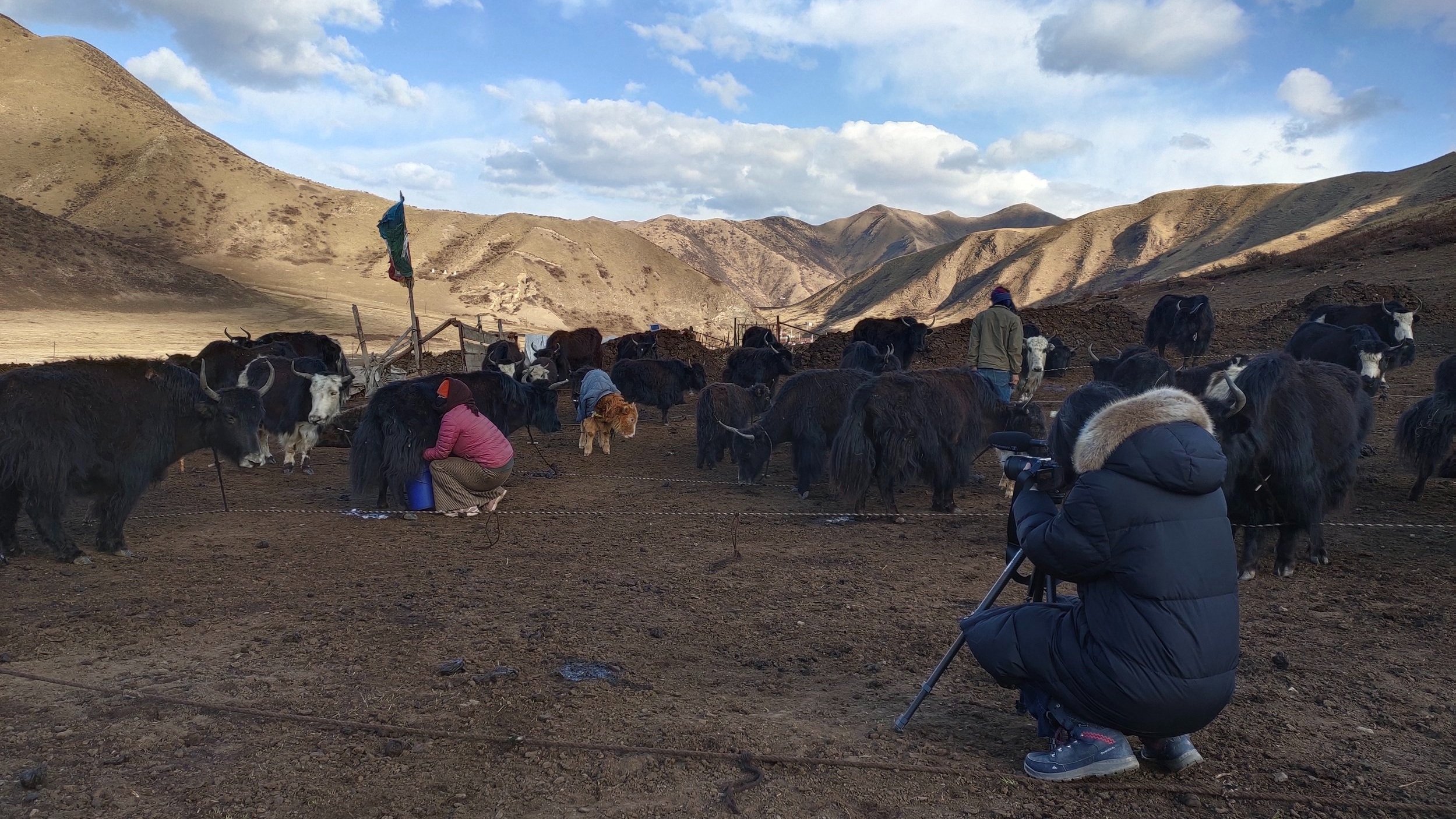
I first became interested in Daze through From Our Eyes, a nonprofit that placed cameras in the hands of Tibetan herders and taught them to tell their own stories.
Daze learned filmmaking through this program and began turning his camera toward the grassland around him.
I wondered what filming might do beyond preserving a record.
Could looking through a lens change the way someone understood a place they had known all their life? Could it lead somewhere unexpected?
These questions brought me to the Tibetan Plateau.
I lived with Daze and his family for nearly three months, first on the summer pasture in 2023, then on the winter pasture in early spring 2024, and moved with them during their seasonal migration.
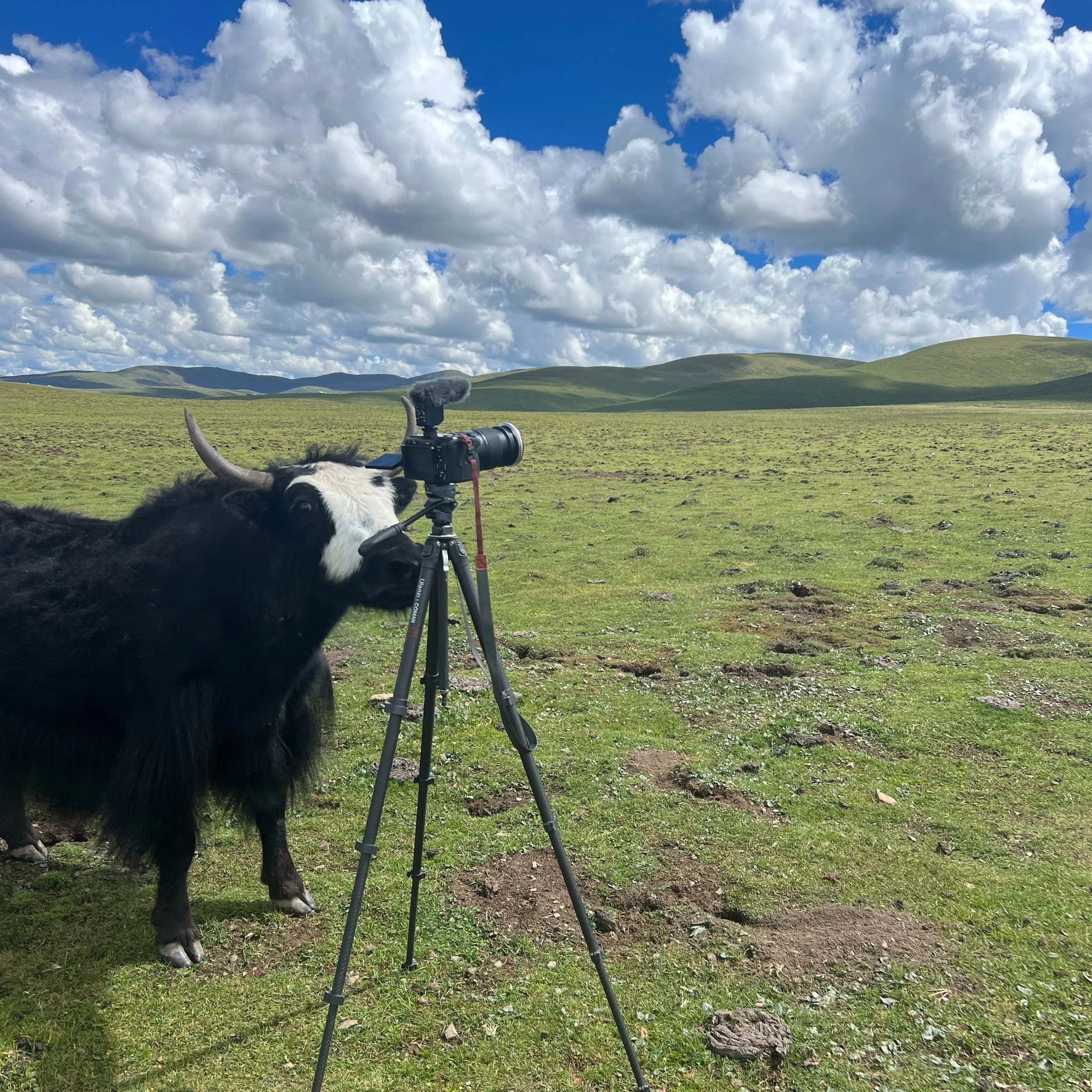
From the beginning, they treated me less like a guest than someone who belonged. There was no formal moment of arrival; I was simply folded into their meals, routines, and silences.
We shared no common language, yet much could be understood through gestures, expressions, repetition, and the intimacy of daily life.
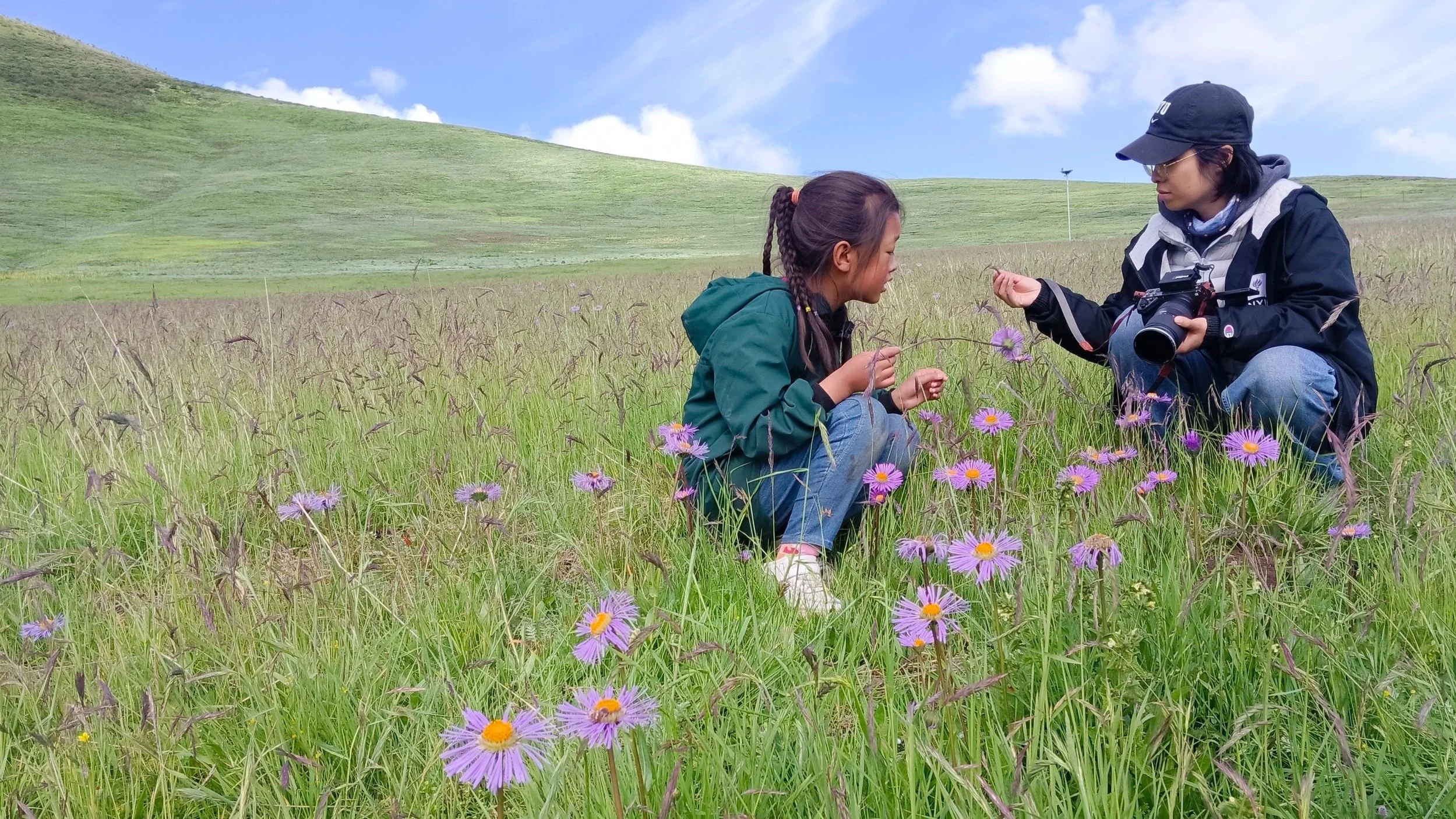
When words were necessary, translation passed through a fragile network of people: relatives, friends, staff at a small hotel where I sometimes recharged my batteries, and often Daze’s daughter, Kawa Tso, who would sit between us and translate Tibetan into Mandarin with a child’s solemn concentration.
Kawa Tso is growing up between languages: studying Tibetan and Mandarin at school and, when I last saw her, beginning to learn English. I often wonder where her voice will travel.
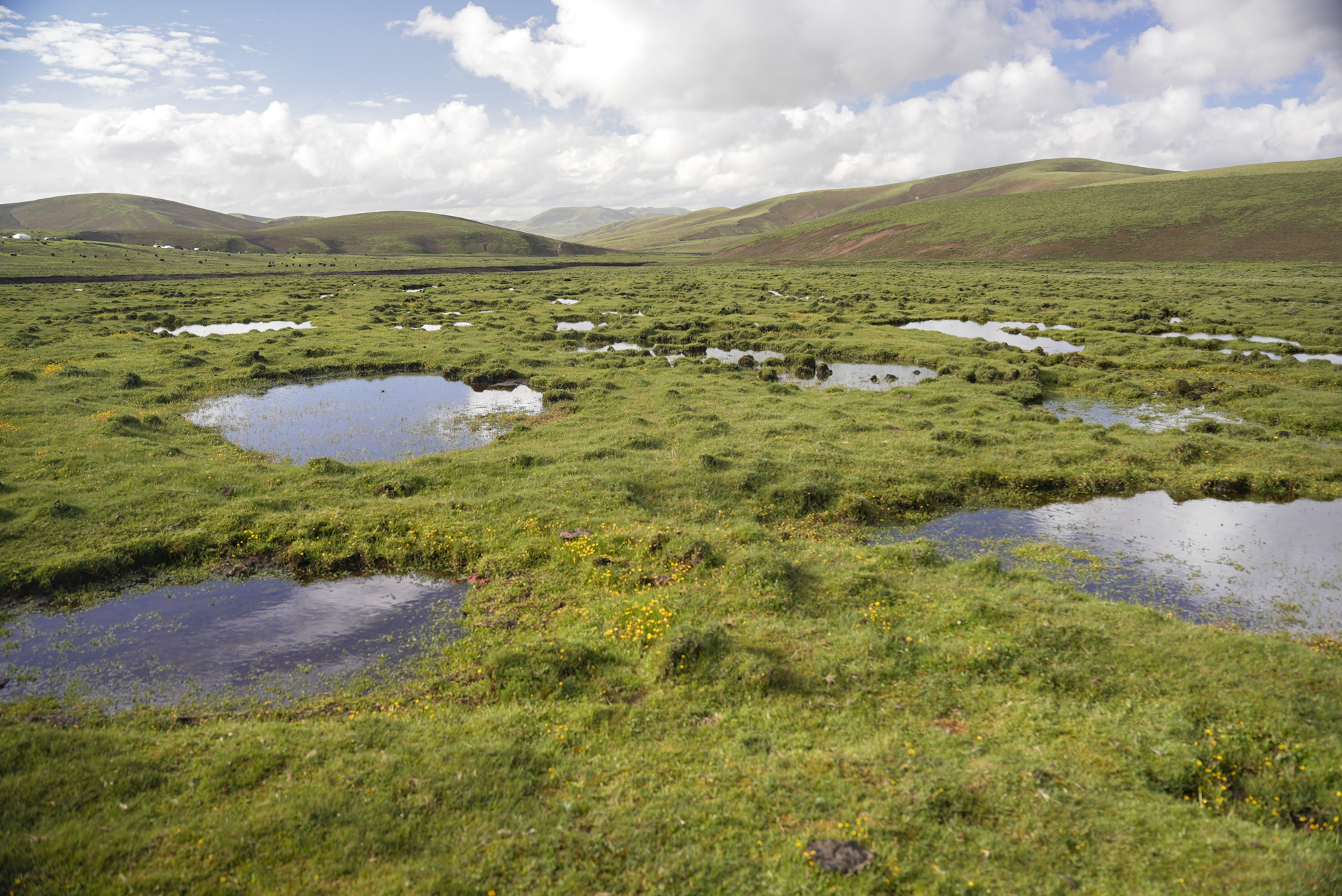
Working alone meant that my camera inevitably missed some of the moments I most wanted to hold onto.
Time felt different there, slower and more spacious. At 4,300 meters, I could not simply run to get a shot. For a wide frame, I carried my camera step by step to the opposite hillside and waited.
I watched a yak cry after wolves had killed another.
I saw a crow fall from an electrical pole, trembling on the ground after being electrocuted.
I noticed Dorjee Tso drawing on years of pastoral experience and practical wisdom as she carefully stretched limited resources to sustain the household.
Outside, the children ran freely across the open grassland. Their freedom awakened something childlike in me that I had almost forgotten.
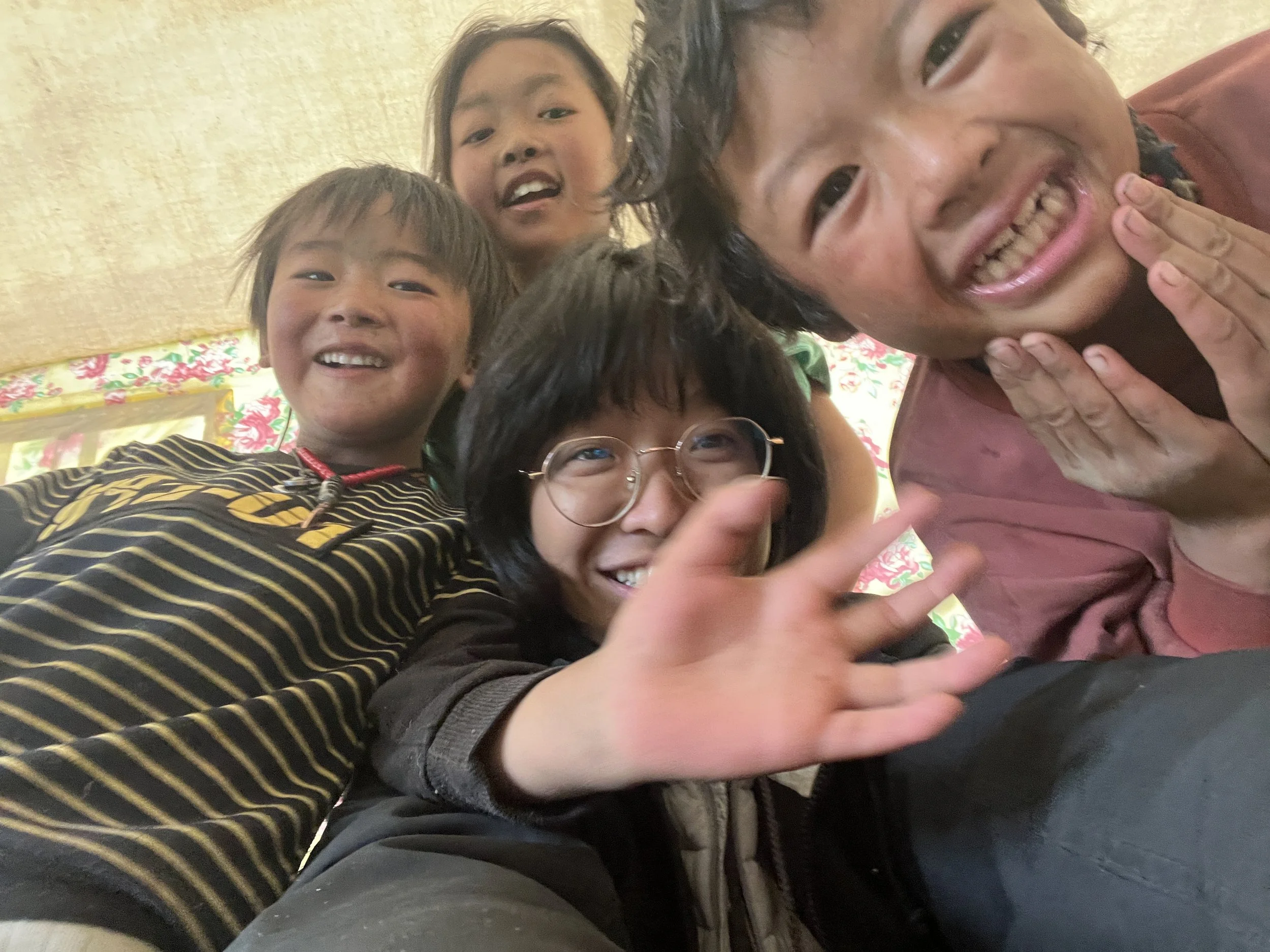
On the summer pasture, phone service lasts only as long as the sun can power the signal tower. When the sun slips behind the mountains, the electricity fades, and every phone falls silent.
The winter pasture lies closer to town, where the signal holds, and daily life is more convenient.
Yet in both places, convenience seemed secondary to other forms of connection: shared labor, repeated gestures, and quiet attention.
Even after I returned to New York City, the family continued to send short messages asking about my days, whether I was eating well, whether I was cold. Their care made the distance feel less absolute.

These encounters made me reconsider human development: what we bring into a landscape, what we call progress, and what may be disrupted along the way.
They also changed how I filmed. I used explanation when it helped someone unfamiliar with this life understand what they were seeing, but increasingly I wanted to remain with each moment and allow it to speak for itself.
I hope this film invites you to spend a little time with us on the Tibetan Plateau.
I’m continuing to share memories and stories from my time on the Tibetan Plateau in my Tibet collection on RedNote (Xiaohongshu).
Click here to take a look, follow along, and share your thoughts and stories with me!
If you’re interested in the making of this film or the ecology of pastoral life in Tibet, I’d love to hear from you.
Feel free to reach me at kechendoc@gmail.com